
The Answer Isn't Better Waste Management. It's Waste Prevention at the Source.
Over 400 million tonnes of plastic are produced globally every year. Less than 10% is recycled. The rest ends up in landfills, oceans, and increasingly, inside us. Anti Gravity Bottle™'s bag-in-bottle architecture turns every single-use bottle into a reusable shell with replaceable pouches, cutting plastic waste by up to 88% per use while enabling non-plastic inner bag materials that could finally break the cycle.
Why Bag-in-Bottle Changes Everything
Traditional bottles are both the container and the product contact surface. Anti Gravity Bottle™ separates these roles. The outer bottle provides structure. The inner bag touches the product. And the inner bag can be made from anything.
The Single-Use Trap
Standard squeeze bottles are used once and discarded. The product touches the plastic walls directly, so the bottle can't be cleaned and reused for a different product. When it's empty, it's trash.
This isn't a recycling problem. It's a design problem. The only way to solve it is to separate the container from the product contact surface entirely.
The Structural Solution
Anti Gravity Bottle™'s inner bag can be made from non-plastic materials: seaweed-based films, plant polymers, medical-grade silicone, or compostable alternatives. The product never touches the rigid outer housing.
Inner Bag Material Options
Seaweed-Based Films
Derived from algae, these films are fully marine-biodegradable and require no arable land or fresh water to produce. Already used in single-serve food packaging.
Commercially availablePLA (Polylactic Acid)
Plant-derived thermoplastic made from corn starch or sugarcane. Industrially compostable within 90 days. Widely used in food service packaging.
Commercially availablePlant-Based Polymers
Cellulose acetate and starch-based films that break down naturally. Can be engineered for specific barrier properties depending on the application.
Commercially availableMedical-Grade Silicone
Inert, non-leaching, and virtually indestructible. Zero microplastic shedding. Ideal for baby bottles, healthcare, and reusable applications.
Commercially availableMultilayer Barrier Films
Compostable films with oxygen and moisture barriers for sensitive products like pharmaceuticals, cannabis oils, and premium cosmetics.
Emerging technologyWe're seeking partners in the biodegradable materials space to bring the complete solution to market.
Plastic Waste Prevention at Scale
Recycling alone cannot solve the plastic crisis. The replaceable pouch model prevents waste before it's created.
88%
less plastic per refill cycle
Reuse the bottle, replace only the pouch
100%
of product dispensed with zero waste
Inner bag collapses flat, every last drop comes out
50B
fewer bottles entering the recycling stream annually
One reusable shell replaces hundreds of single-use bottles
Keep the Bottle. Replace the Pouch.
The durable outer bottle lasts for years. Consumers swap in a lightweight replacement pouch when one runs out. No cleaning, no cross-contamination, no full-bottle waste.
Each replacement pouch uses a fraction of the material of a full bottle. At scale, this translates to up to 88% less plastic per use across most applications.
less plastic per use
Lightweight inner pouches use a fraction of the material. Brands sell the refills. Consumers reduce waste without changing behavior.
A $250 Million Industry That Shouldn't Exist
Tube squeezers, roller keys, wall-mounted wringers. Consumers spend $3–25 per gadget to extract the 10–20% of product that conventional packaging can't dispense. This aftermarket industry is projected to reach $250 million by 2030, growing at 7.5% annually. It exists for one reason: packaging fails at its primary job.
How Much Product Never Leaves the Bottle
Peer-reviewed data from Sustainability (MDPI, 2025)
The Aftermarket Approach
Metal roller keys. Geared wringers. Wall-mounted automatic dispensers. Even caulk gun-style tube squeezers. Amazon has a dedicated "Tube Squeezing Aids" subcategory. Consumer Reports reviews them. TikTok videos about them get millions of views.
At best, they reduce waste from 15% to 7–10%. They require a separate tool per tube. They add cost, clutter, and friction to a daily routine. They are, fundamentally, an admission that the packaging is broken.
The Anti Gravity Bottle™ Approach
The inner bag collapses flat against itself as product is dispensed. No walls to cling to. No corners to trap residual. No dead space. No aftermarket gadgets needed.
Why Recycle When You Can Simply Reuse?
The recycling system is overwhelmed. Even at peak performance, it can only process a fraction of what we generate. Anti Gravity Bottle™ sidesteps the problem entirely.
The Volume of Plastic Hitting the Recycling System
110,000
tons of plastic waste generated in the US every day
3.3M
tons of plastic waste generated in the US every month
40M
tons of plastic waste generated in the US every year
Of that 40 million tons, only 5-6% is actually recycled. The rest goes to landfill, incineration, or the environment. Globally, 400+ million tons of plastic are produced each year, with only 9% ever recycled.
Americans alone use 60 million plastic bottles every day. That's 50 billion bottles a year, with 88% ending up in landfills or the ocean.
And the waste doesn't just sit in landfills. It breaks down into microplastics that enter our water, food, and bodies. Researchers have found plastic particles in human brain tissue, placentas, arterial plaque, and 99% of seafood tested. The recycling system was never designed to handle this volume. The only real solution is to stop generating the waste in the first place.
Anti Gravity Bottle™: Built to Reuse, Not Recycle
The Anti Gravity Bottle™ outer shell is designed to last for years. It never contacts the product inside, so it never gets dirty. When the product runs out, consumers swap in a lightweight replacement pouch. No cleaning. No waste. No recycling needed.
Each replacement pouch uses a fraction of the plastic of a full bottle. Over hundreds of refill cycles, one Anti Gravity Bottle™ replaces hundreds of single-use bottles that would otherwise enter the waste stream.
The best bottle to recycle is the one you never throw away.
less plastic per use vs. buying a new bottle
of refill cycles per outer bottle, zero waste per swap
fewer bottles burdening the recycling system
Your "Empty" Bottle Isn't Empty. And Recycling It Wastes Water.
Consumers throw away bottles thinking they're empty. They're not. Then the recycling process uses significant water just to clean the residue out. It's waste on top of waste.
What's Left Behind
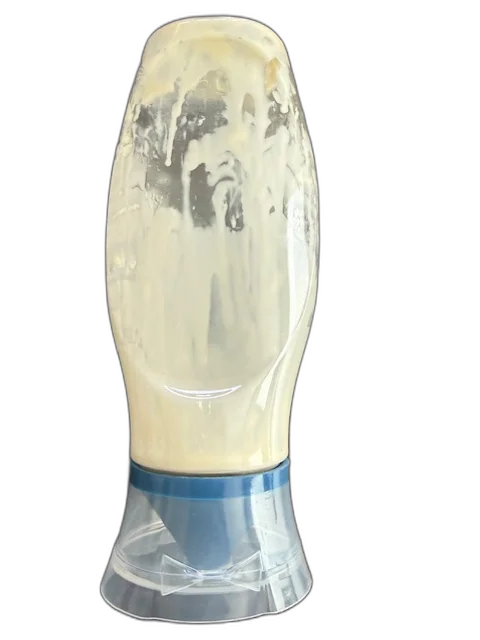
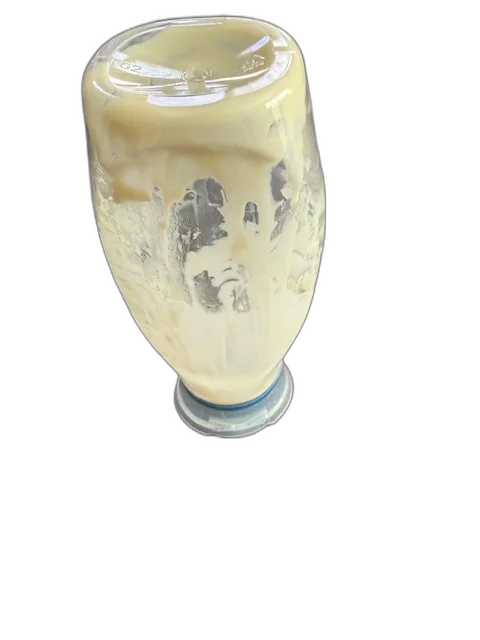
An "empty" mayo bottle. That's product you paid for, headed to the landfill.
13–29%
of ketchup remains in a plastic squeeze bottle
Source: ScienceDirect, food-packaging systems study
A peer-reviewed study found that up to 29% of ketchup stays stuck inside standard plastic bottles, even after consumers try to shake, squeeze, and slap the last bit out. Glass performs slightly better at ~4%, but rigid containers all share the same fundamental problem: the product clings to the walls.
This isn't just ketchup. Mayo, mustard, shampoo, lotion, honey, hot sauce. Any viscous product in a rigid bottle leaves behind product you paid for but never used.
The study concluded that poor emptiability causes greater environmental impact than the packaging itself. The wasted product required resources to grow, process, package, and ship, only to end up in a landfill.
The Water Cost of Recycling
~4 gal
of hot water blasted into each bottle during commercial recycling
At 80 PSI for 60 seconds, plus rinse and sanitize cycles
Before a plastic bottle can be recycled, it needs to be cleaned. At home, consumers are told to rinse bottles out. At commercial facilities, each bottle gets hot soapy water at 80 PSI for a full minute, followed by additional rinse and sanitize cycles.
Multiply that across 50 billion bottles per year in the US alone, and the water footprint of recycling becomes staggering. And that's before considering that producing 1 liter of bottled water already requires 3 liters of water to manufacture.
If the bottles aren't clean enough? They get rejected and sent to landfill anyway. All that water, wasted on bottles that still end up as trash.
Anti Gravity Bottle™ Solves Both Problems at Once
~0%
Product left behind
The inner bag collapses flat as you squeeze, pushing virtually every drop out. No clinging to walls. No waste.
0 gal
Water needed to clean
The product never touches the outer bottle. Reuse keeps it out of the recycling stream entirely. When it finally is recycled, it requires little to no water because there's nothing to wash off.
2x
Savings compounded
Less product wasted per bottle AND less water wasted per recycling cycle. The environmental savings multiply across every use.
Traditional bottles waste product, then waste water trying to recycle the container. Anti Gravity Bottle™'s collapsible inner bag delivers every last drop, and the reusable outer shell never needs cleaning because it never contacts the product. Zero product waste. Zero water waste. One bottle, used hundreds of times.
Industries With the Most to Gain
Any industry that relies on single-use plastic bottles can cut waste dramatically with a reusable shell and replaceable pouches. These sectors stand to benefit the most.
Food & Condiments
Ketchup, mustard, mayo, sauces. Billions of single-use squeeze bottles hit landfills every year. Refillable pouches cut that volume by 88%.
Personal Care & Cleaning
Shampoo, lotion, dish soap. 550 million shampoo bottles alone reach US landfills annually. Each takes 450 years to decompose.
Industrial & Specialty
Adhesives, paints, lubricants. Heavy-use applications burn through bottles fast. A reusable shell with replaceable pouches slashes material costs and waste.
E-Commerce & DTC Brands
Refill pouches ship flat, reducing packaging weight and shipping emissions. Brands sell the refills as a subscription, turning sustainability into recurring revenue.
Plastic waste isn't just a landfill problem. It's inside us.
Microplastics have been found in human brain tissue, in every placenta tested, in 99% of seafood samples, in Arctic snow, and even inside clouds. A 2024 study linked microplastics in arterial plaque to a 4.5x increased risk of heart attack or stroke. Packaging is the single largest source of plastic waste globally.
Anti Gravity Bottle™'s bag-in-bottle architecture separates the product from the outer bottle, and emerging non-plastic inner bag materials may finally enable the elimination of plastic-to-product contact.
Ready to Explore Licensing?
Get the full technical white paper with market data, implementation roadmap, and licensing models.
Request White Paper